Monday, 7 March 2011

Wheatfield With Crows – The Last Painting of Vincent Van Gogh (maybe).


Vincent Van Gough was not rated when he was alive, unlike, though maybe a tenuous link, Jimi Hendrix, yet through death both are still very much alive and have become house hold names. It seems that death can be the making of you, hell maybe if I croak with a fantastic photo to my name, maybe I’ll go down in the history books, but I very much doubt that, I refer to the history book of course, not the dying bit, that’s a given. I was looking at the print in the wall of my living room of Van Gogh’s ‘Starry Night Over The Rhone’ and then thought of the first episode of John Berger’s ‘Ways of Seeing’, he showed a couple of painting in silence and then told the story, background information or in this case, that of ‘Wheatfield With Crows’, some say that this was the last painting of Van Gogh and that this was the place or similar to where he shot himself in the stomach, dying 2 days later in his bed, however I have read that others say that there were several more paintings after this one. Looking at a photograph of the original, and again referring to John Berger, the painting has such texture and atmosphere, but is still unlinked when viewed on a computer screen; I can only imagine what it must be like to stand in front of it, seeing the thick heavy brush strokes put on over one hundred years ago. Also how the image changes from giving vivid imaginations of running through it, or an image conjured up from reading a book to having an air of sadness that is quite troubling, yet like looking at an optical illusion, the mind can only concentrate on one image or in this case one set of emotions, flicking, even if it is just for half a second, from wonder and awe to sadness and possibly even an emptiness knowing that this was the last one or one of the last and the circumstances that lead to the end, but then flicking back to joy of thinking of all the other wonderful paintings he created. This I feel is the power of a painting or a photograph, a film or moving picture is static and a photo is constantly moving, shifting; a film dictates how you should feel with colour and music or sometimes that lack of both, we watch a comedy to laugh or cheer us up or a thriller to be whisked away into life of espionage that 99% of us can only dream of or read in books, yet a photograph depending on your mood, the weather, the lighting on the surface, even our age and life experiences from one day to the next, year to year can change how we interact with a ‘static’ painting or photo, so next time when looking at a painting you like and have seen before, think how you are reacting or interacting to it from last time, I’m sure it’ll have changed in your minds eye.

Saturday, 5 March 2011

Ways of Seeing - John Berger - Episode 1


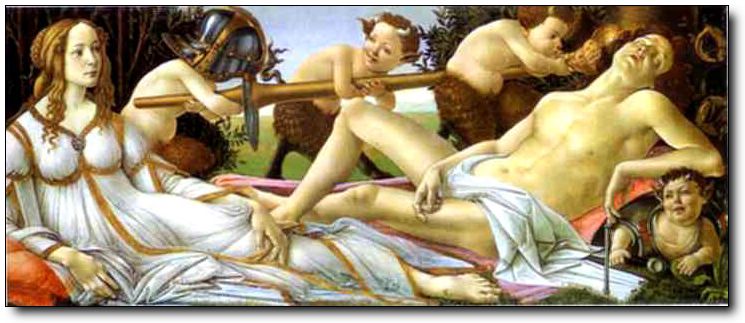
John Berger ran a series of 4 television programs about art, originally broadcast in 1972. Looking at the first program, he was detailing how we look at art, be it photographs or paintings, the originals; he wanted to explain that the original had so much atmosphere, depth and sheer presence first hand, than looking at the original but via a television set. He also showed how an iconic painting or photograph when zoomed in on, through the television or even just cropped can diminish everything that the painting was try to state and how, in this instance, Botticelli’s Venus & Mars when cropping just the head of Venus, she is portrayed as just another pretty woman. This cropping can be done to alter people’s ideas, manipulate they’re thoughts on a subject, the saying ‘the camera never lies’ clearly falls apart with this statement, the viewer can be intentionally mislead to make them come the wrong but intended conclusion just though the simple act of cropping, sometimes it’s not what you show, it’s what you leave out.

The invention of the television and now the internet can now make images, obviously photographs of the originals or copies of copies of copies available to everyone, anywhere at any time, and the image that you can see at the top of this blog is potentially being viewed by someone else right now. The only difference is that the impact the original has, is that it is not surrounded by clutter on a desk, such as tea mugs, staplers, hole-punches, desktop printers and a whole gamut of distracting peripherals. Another element of note is that in a portrait gallery, there is little distraction of sound; you are engaged in the image, taking note of small areas, however never isolating that section from the rest and therefore you are still seeing the whole image as it was intended. When viewing an image via the television, it can be extenuated through panning from left to right and vice versa and so creating, as Berger (1972) says, selecting and rearranging elements to create a narrative and thus creates an unfolding story or even a story board, however there is no unfolding of the story when viewed as a whole, simultaneously. An image can also be manipulated with the use of music, often used in television programs to break the silence and add mood, though an painting can deliver different feelings if for example music from an energetic, lively opera can change the feeling if the music is that of a religious choral piece. In conclusion of the first 156 minutes of the episode it is clear that sound, panning and cropping of paintings can have enormous impact, though sometimes detrimental and mis-leading.

The Ways Of Seeing. (1972) Episode 1, Art in the age of mechanical reproduction. [Television Broadcast]. 1972. UK: BBC.

Saturday, 19 February 2011

Faking It


On the afternoon of Thursday 3rd of February we had a guest speaker to deliver a talk, Dean Loughran from the Bradford Media Museum, who is the Future Strategy Coordinator; this was an interesting talk and covered a few topics, which one part of it was on, what we think is only available to us now via digital technology, the faking of photographs; however this had been happening in the early years comparatively shortly after the birth of photography, for a more recent example were the 2 girls from Cottingley in Bradford who fooled a high percentage of the nation into thinking that there were fairies living at the bottom of their garden, taking in some high profile people, Arthur Conan Doyle for one, however we can see that this is some fairies cut out of a book and propped up, however I fell that it is easier to discredit this photograph now due to this activity happening so much more, that we disbelieve until proven otherwise. Another example is with Henry Peach Robinson in 1862, who created, though not maliciously, a fake photograph from 9 different glass plate negatives, however this was very carefully and cleverly constructed. This just goes to show that ‘faking it’ has been around longer than most would have believe. A more indepth peice on this photograph and Henry Peach Robinson work can be found on the National Media Museums website: Bringing Home The May - Henry Peach Robinson

Saturday, 12 February 2011

Making a photographic statement

On one of my other modules for this semester is a photographic project in 2 parts, the first being to photograph a certain area of Bradford, a page from the A to Z, a ‘journey of discovery’ and reflecting on ‘space and place’, though I am not entirely sure what I am supposed to discover, maybe the aim is to discover myself, though that sounds a little philosophic, a tad too whimsical for my tastes. On my first visit I was not really impressed with the images, still trying to find a handle on the assignment and also what I want to say, I feel the need to document and make a photographic statement as opposed to just fulfilling the brief and scraping through, trying too hard has been mentioned more than once. I will say that for students reading this, talk to your tutors and equally as important, talk to your class mates, sharing ideas has given me a small nudge in the right direction, broken windows, litter, old and new building standing next to each other, lack of use of public facilities such as playground and parks. However for part two, I do have a subject, that came to me relatively easier, after some searching and researching on the internet I am intending to photograph landscapes steeped in folklore and or ghost stories, attempting to show how dramatic gorges and naturally born almost symmetrical hills can create wonderful and sometimes spine chilling stories; my intended area is The Barden Triangle and very much looking forward to getting out there, maybe I’ll get a snap of the Barden Bargest.

Saturday, 5 February 2011

Bill Owens


In my last blog I mentioned Bill Owens, one of his stand out projects was Suburbia, a collection of photographs taken in a cul-de-sac in the 1970’s California, these were just ordinary people, living good quality lives; he was able to gain their trust and show an insight and personal aspects of their home life. Last semester we, the photography students, had a couple of talks given by Donovan Wylie, the current fellow at the Bradford Media Museum, showing us environmental portrait photography, one picture of many he showed us was this one, which as he rightly said, not a square inch was wasted, if you were to see this as a snapshot in a family album, you would be really wowed. The use, whether intended or his preferred film, of black and white draws the viewer to look at the content and take in the textures which are incredibly rich, as opposed to being distracted by the colours. I think you’ll agree that this is quite an intimate picture, quite possibly barbequing for Bill as well. And as usual, though maybe a little sexist, the chap driving the BBQ, which to be fair, is a common occurrence when you next peek over you garden fence to see your neighbours having burnt offerings.

Monday, 31 January 2011

Jo Ann Walters

Jo Ann Walters - Vanity + Consolation series


Bill Owens - Suburbia
As I was looking for writing inspiration in other blogs regarding photography, I came across this environmental portrait that really struck me, even though from reading the blog that the photographer was Jo Ann Walters, I felt that the composition and style was similar to that of Bill Owens, one of his best known bodies of work being Suburbia, though this is one of a quite a few. I feel the big thing about these two photogrpahs it that of trust towards the photographer, one other element is the use of and the unitiy of 'the family'.

Advertising with the physical.


The other day I took this photograph in Bradford on Great Horton Road, just up from the University, the image caught my eye, as I am sure you can imagine, and thought maybe someone had chained a rather large tyre to a ‘No stopping except buses’ sign to retrieve at a later date, more convenient for themselves, however I noticed, sadly, that this was just a means of advertising for the new and part worn tyre business down the cobbled road. We all know this, and it is clear when walking or driving around anywhere, of the power of advertising and how subtle it can be, however this time the power of the not so subtle advertising didn’t work on me, unless I was in search for a cheap set of boots for my car, maybe I see things differently or perhaps I just expect more from the eccentrics that inhabit Bradford, better luck next time.

Having revisited this blog and also gaining knowlwndge from the lectures within the visual communication module I will address the composition, something I did not include in the initial posting nor was really obvious to me at the time; the photography has 3 clear bands, and as I say only really noticed as we have very recently discussed the segments of paintings giving the impression of depth or distance. The darkness of the road although tarmac is black has a dark blue hue to it and compliments the sky almost taking up the same amount of space within the picture and then amidst this relative calm and uniform expanse is this visual cacophony of 'stuff' that the eye can move up and down from, almost breathing space before having another look.

The kind comment left by one of my class mates also nade reference to the blues, though left a while ago, has triggered this addition.